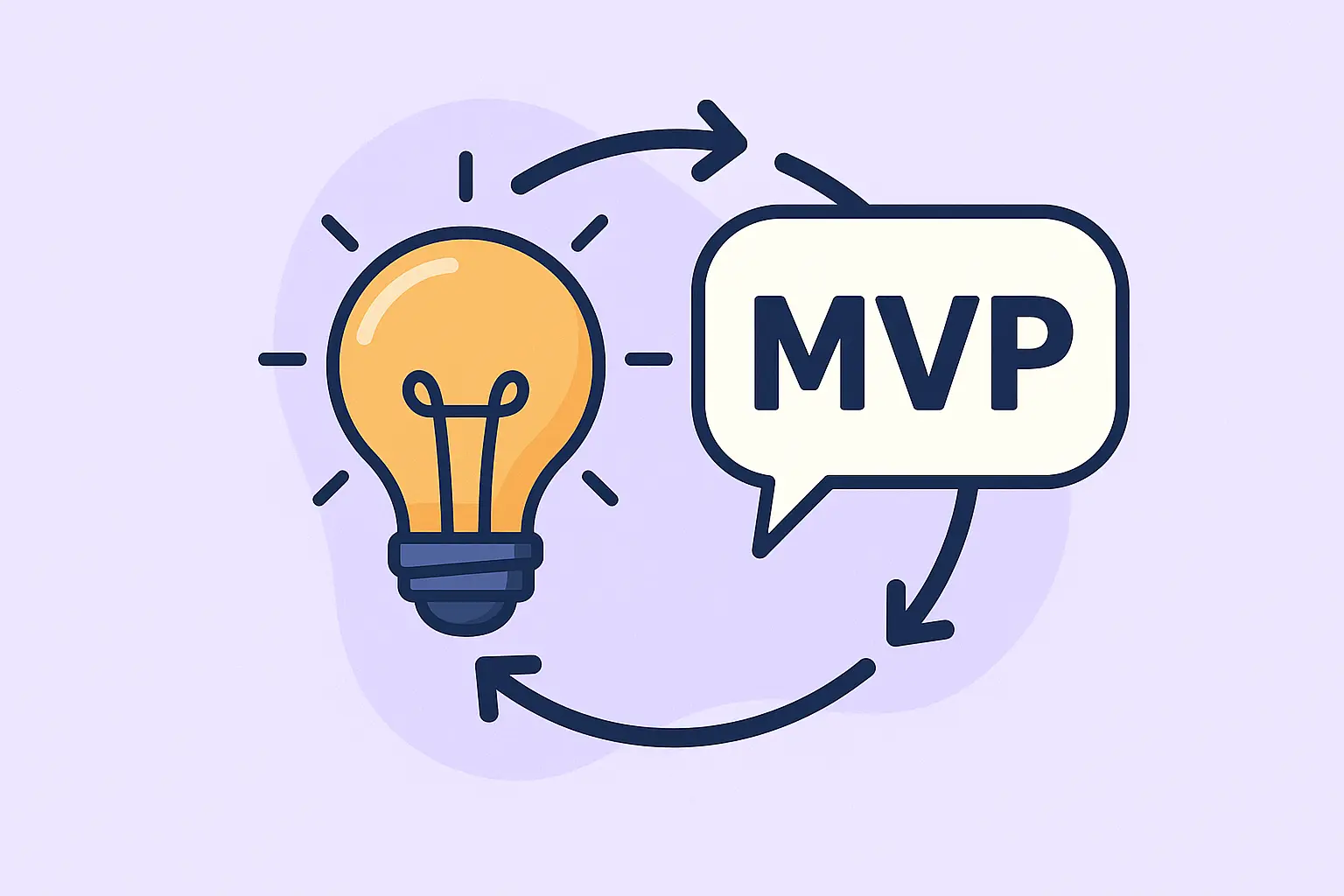
When launching a startup, building a perfect product from day one can be tempting. But the reality is: your idea needs validation before scaling. That’s where an MVP (Minimum Viable Product) comes into play.
✅ What is an MVP?
An MVP (Minimum Viable Product) is the most basic version of your product that still solves the core problem for users. It includes only the essential features necessary to deliver value and gather feedback.
Instead of spending months or years perfecting a product, startups launch with just enough functionality to test the concept with real users.
🔍 Why Should Startups Build an MVP?
1. Validate Your Idea
An MVP allows you to test your assumptions in the real world. If users don’t find value in your MVP, you avoid wasting resources on a full-scale product that won’t work.
2. Save Time and Money
Instead of burning your budget on features users may never use, you build only what’s essential, saving months of development time and capital.
3. Faster Time to Market
With an MVP, you launch sooner. This means you can beat competitors to market, start building a user base, and gather early momentum.
4. Real Feedback, Early On
Early adopters will tell you what’s working and what’s not. That feedback is invaluable to iterating quickly and evolving into a product-market fit.
5. Attract Investors with Real Usage
Investors are more likely to fund startups that have a working MVP with active users than just a pitch deck. An MVP makes your concept more tangible.
💡 What Does an MVP Look Like?
An MVP doesn’t mean “unfinished” or “ugly.” It means focused. Here are examples:
- Dropbox started with a simple explainer video.
- Instagram launched only with photo sharing.
- Airbnb began by renting out air mattresses in their own apartment.
🚀 How to Build an MVP
- Identify the Core Problem
- Focus on solving one pain point really well.
- Define Must-Have Features
- List all features and trim down to the core.
- Build, Test, Learn
- Launch, measure user interaction, and improve based on feedback.
- Iterate
- Add features gradually as you understand what users truly want.