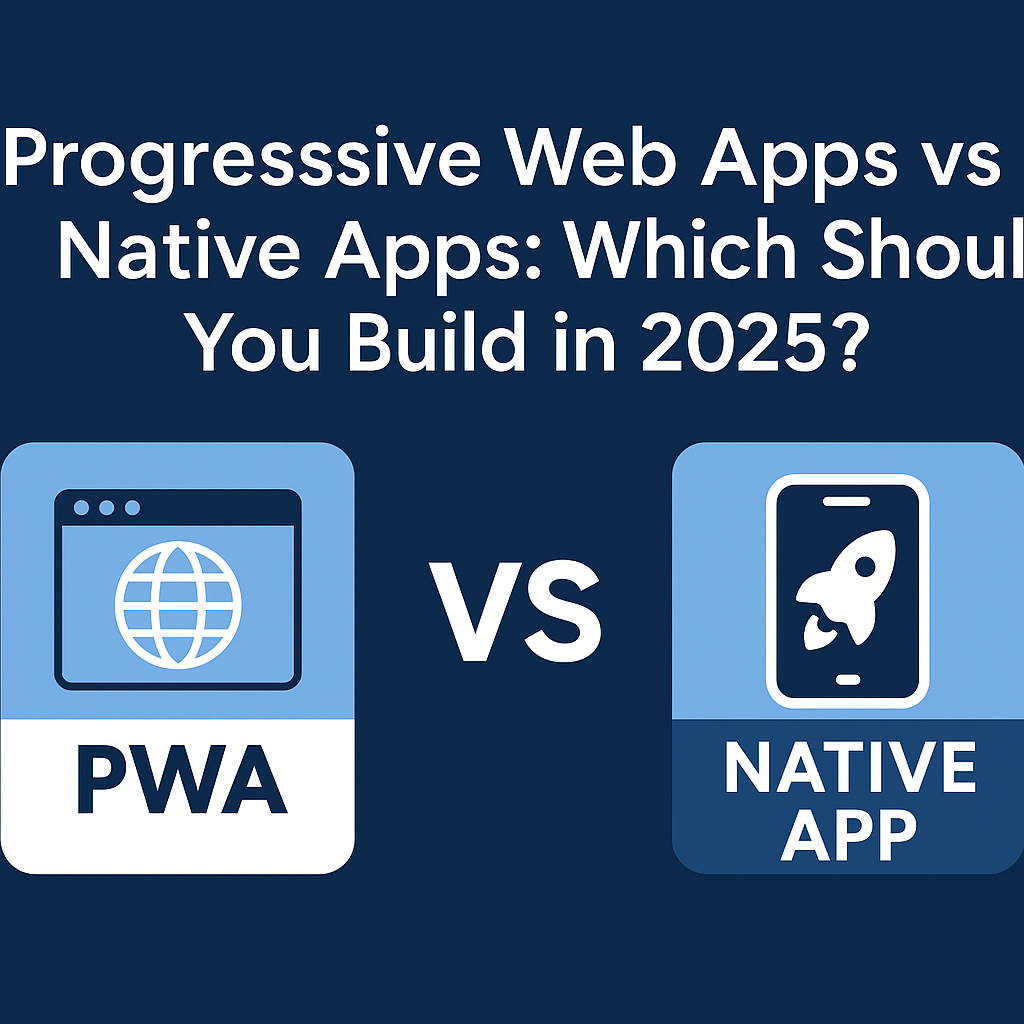
As technology evolves, the line between web and mobile applications continues to blur. In 2025, businesses and developers must carefully choose the right platform to build their digital product. The most common dilemma? Progressive Web Apps (PWAs) vs Native Apps. Each approach has its own strengths, weaknesses, and ideal use cases. This article helps you decide which is better suited for your project in the modern development landscape.
🌐 What Are Progressive Web Apps (PWAs)?
Progressive Web Apps are web applications built using standard web technologies like HTML, CSS, and JavaScript but enhanced with modern features such as offline access, push notifications, and installability. PWAs are accessed via a browser but behave much like native apps.
✅ Key Features:
- Works on any device with a browser
- Can be installed on the home screen
- Loads quickly and works offline
- Delivers push notifications
- Requires no app store deployment
📱 What Are Native Apps?
Native Apps are applications built specifically for an operating system — typically Android or iOS. They are developed using platform-specific languages like Kotlin/Java (Android) or Swift/Objective-C (iOS), and they must be downloaded from app stores.
✅ Key Features:
- Full access to device features (camera, Bluetooth, GPS, etc.)
- Optimized for performance
- Better support for animations, sensors, and background tasks
- Distributed via Google Play or App Store
- Often feels more seamless to end-users
💼 When Should You Choose a PWA?
- You want to launch quickly with a smaller budget.
- You need a single codebase for both desktop and mobile.
- Your app is content-driven (e.g., blog, news, e-commerce).
- You don’t need deep access to device hardware.
- You want better discoverability via web and SEO.
Example use cases: E-commerce stores, SaaS dashboards, event websites, blogs, lightweight tools.
📲 When Should You Choose a Native App?
- You need high performance and complex interactions.
- Your app depends heavily on device hardware (e.g., GPS, camera, Bluetooth).
- You want to publish in app stores for visibility and monetization.
- Your user base prefers the look and feel of native apps.
- You plan on using AR/VR, 3D graphics, or gaming.
Example use cases: Social media apps, mobile games, fintech apps, health/fitness trackers.
💡 2025 Trends to Consider
- iOS support for PWAs remains limited, especially in areas like background sync and notification reliability.
- Android support is mature, offering nearly native-like experience for PWAs.
- 5G and modern browsers have significantly improved PWA speed and responsiveness.
- Cross-platform tools like React Native, Flutter, and Capacitor offer hybrid alternatives combining both benefits.
- App Store regulations are tightening — PWAs can be a good way to avoid restrictions.